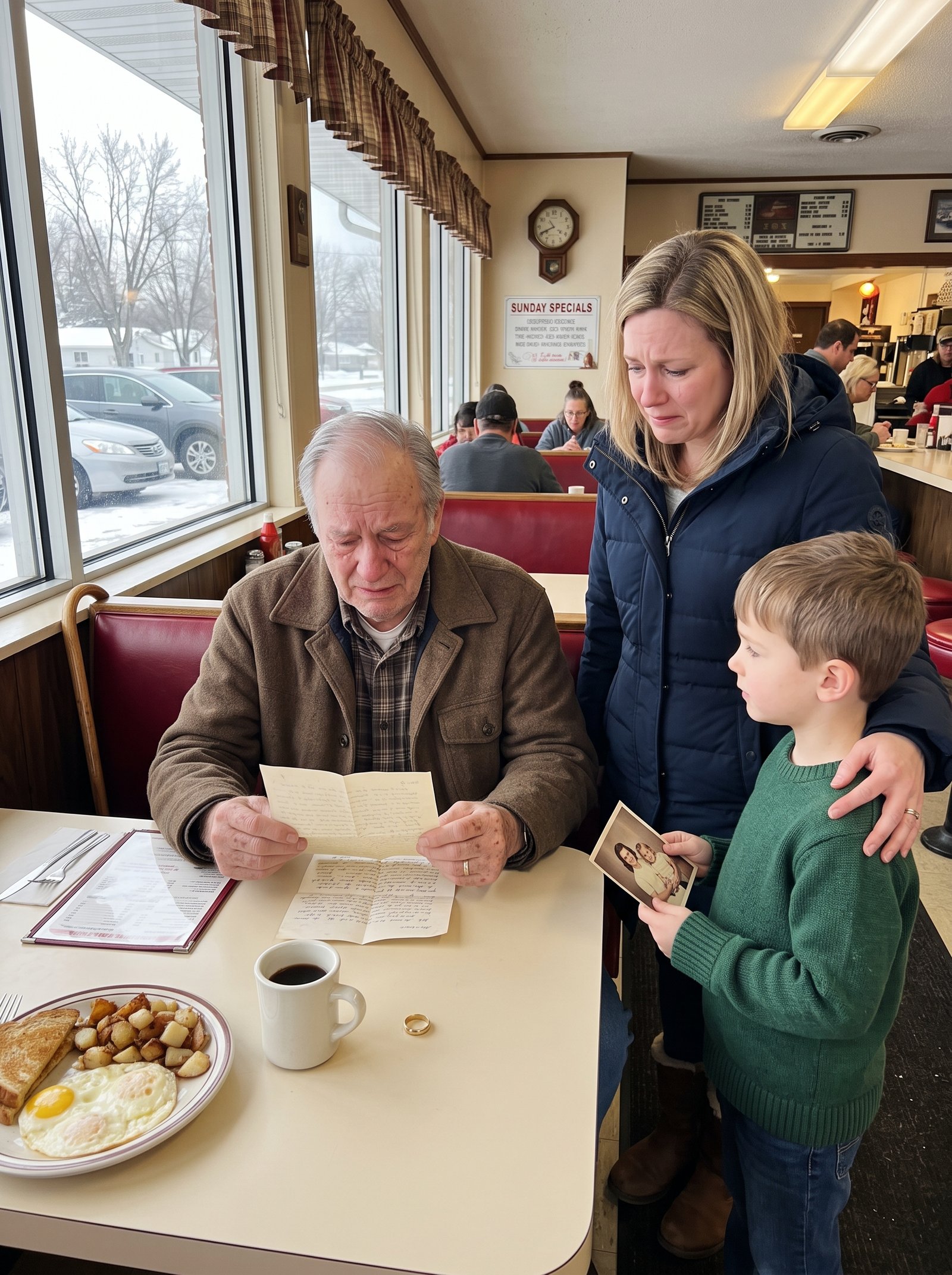
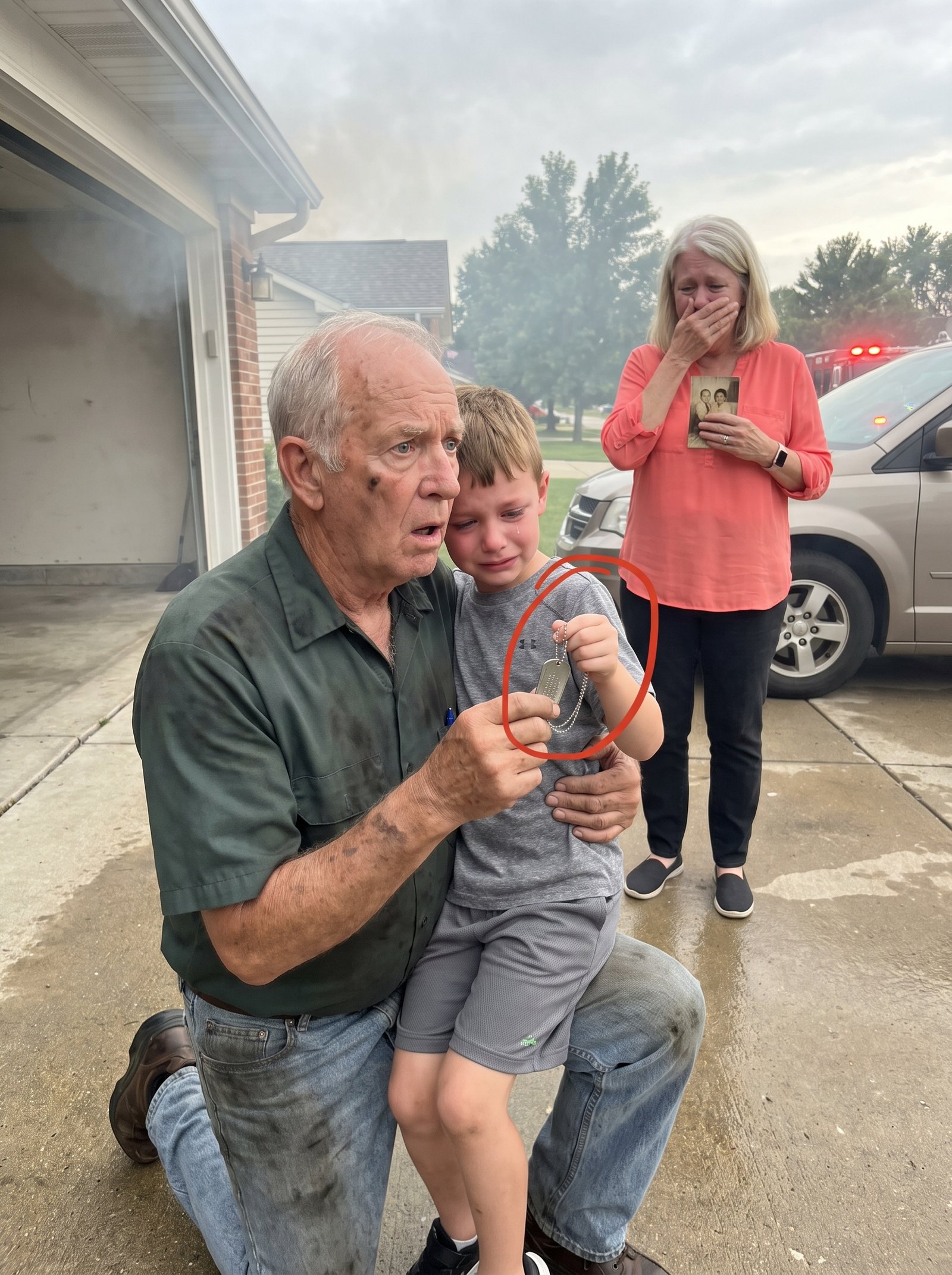
My daughter had been buried less than an hour when my grandson placed a brass key in my hand.
Noah was eleven years old.
His mother, Rebecca, had died six days earlier after her car left a rural road late at night.
Police believed she had fallen asleep behind the wheel.
I had no reason not to believe them.
Until Noah gave me the key.
“Mom gave me this,” he whispered.
My son Eric was sitting across from us.
The moment he saw it, his expression changed.
“For what?” I asked.
“A locker.”
Then Noah pressed PLAY on Rebecca’s old phone.
Her voice filled the funeral reception room.
“Mom… if anything happens to me, open the locker.”
I stopped breathing.
Then came the sentence that changed everything.
“Don’t let Eric get there first.”
I looked at my son.
“Eric?”
He leaned forward.
“Mom… give me the key.”
Noah moved closer to me.
Then he whispered:
“Grandma… Mom said he knows why she died.”
I closed my fist around the key.
The following morning, Noah and I drove to the storage facility printed on a receipt he found among Rebecca’s belongings.
Locker 317 was near the back.
Inside were several boxes, Rebecca’s laptop and an envelope with my name written across it.
I opened the letter first.
MOM, ERIC HAS BEEN TAKING MONEY FROM DAD’S COMPANY FOR YEARS.
My late husband had left a small construction company to both children.
Rebecca handled the books.
Eric managed crews and equipment.
Rebecca had discovered payments going to companies that did not appear to exist.
At first, she believed Eric had simply made accounting mistakes.
Then she followed the money.
Thousands of dollars had disappeared.
When Rebecca confronted her brother, he admitted taking some of it.
He said his own business investments had collapsed and he intended to repay everything.
Rebecca told him she was going to speak with me.
That was when Eric panicked.
But the documents inside the locker revealed something else.
A local mechanic had also been involved in the missing payments.
Rebecca believed invoices were being inflated and the extra money divided afterward.
Three days before she died, Rebecca secretly photographed Eric meeting that mechanic beside her car.
At the bottom of the locker was a small plastic evidence bag.
Inside was a damaged metal component Rebecca had removed from her vehicle after noticing something unusual while driving.
I did not know what it was.
I only knew Rebecca had written one sentence beside it:
IF SOMETHING HAPPENS TO ME, HAVE SOMEONE ELSE EXAMINE THIS.
My phone rang.
Eric.
“Mom, whatever Rebecca left in there, don’t take it to the police.”
“Why?”
He was silent.
Then he began crying.
Eric finally told me the part Rebecca never knew.
He had not harmed her.
But the mechanic had threatened him after Rebecca uncovered the fraudulent invoices.
Eric knew the man was dangerous.
He also knew Rebecca planned to meet him the evening she died.
Eric tried to stop her.
Rebecca refused.
When police originally questioned Eric, he hid the financial dispute because he feared going to prison for theft.
That silence meant investigators never knew about the mechanic.
We took everything to the police.
Rebecca’s case was reopened.
Independent testing later found evidence that a critical part on her car had been deliberately damaged.
Investigators focused on the mechanic.
Additional business records and surveillance footage tied him to Rebecca’s vehicle shortly before the crash.
Eric was not charged in connection with his sister’s death.
But he faced consequences for the money he had taken and for hiding evidence that could have changed the investigation from the beginning.
The truth destroyed our family for a while.
I could not forgive Eric simply because he had not caused Rebecca’s death.
His fear had kept us from the truth.
But something else mattered more.
Noah.
He had lost his mother.
He did not need to lose every other person he loved.
Months later, Eric began repaying the money he had taken.
He also entered counseling and eventually told Noah everything.
No excuses.
No blaming Rebecca.
Just the truth.
Rebecca’s construction-company shares were placed in trust for Noah.
I kept the brass locker key.
It now hangs beside a photograph of Rebecca in my kitchen.
Noah once asked why I did not throw it away.
I told him:
“Because your mother knew she might not be heard. That key made sure someone eventually listened.”
Rebecca could not come home.
Nothing would change that.
But her voice had survived long enough to expose the secret she was afraid would disappear with her.
And sometimes justice begins with something as small as a frightened child placing a key in his grandmother’s hand.