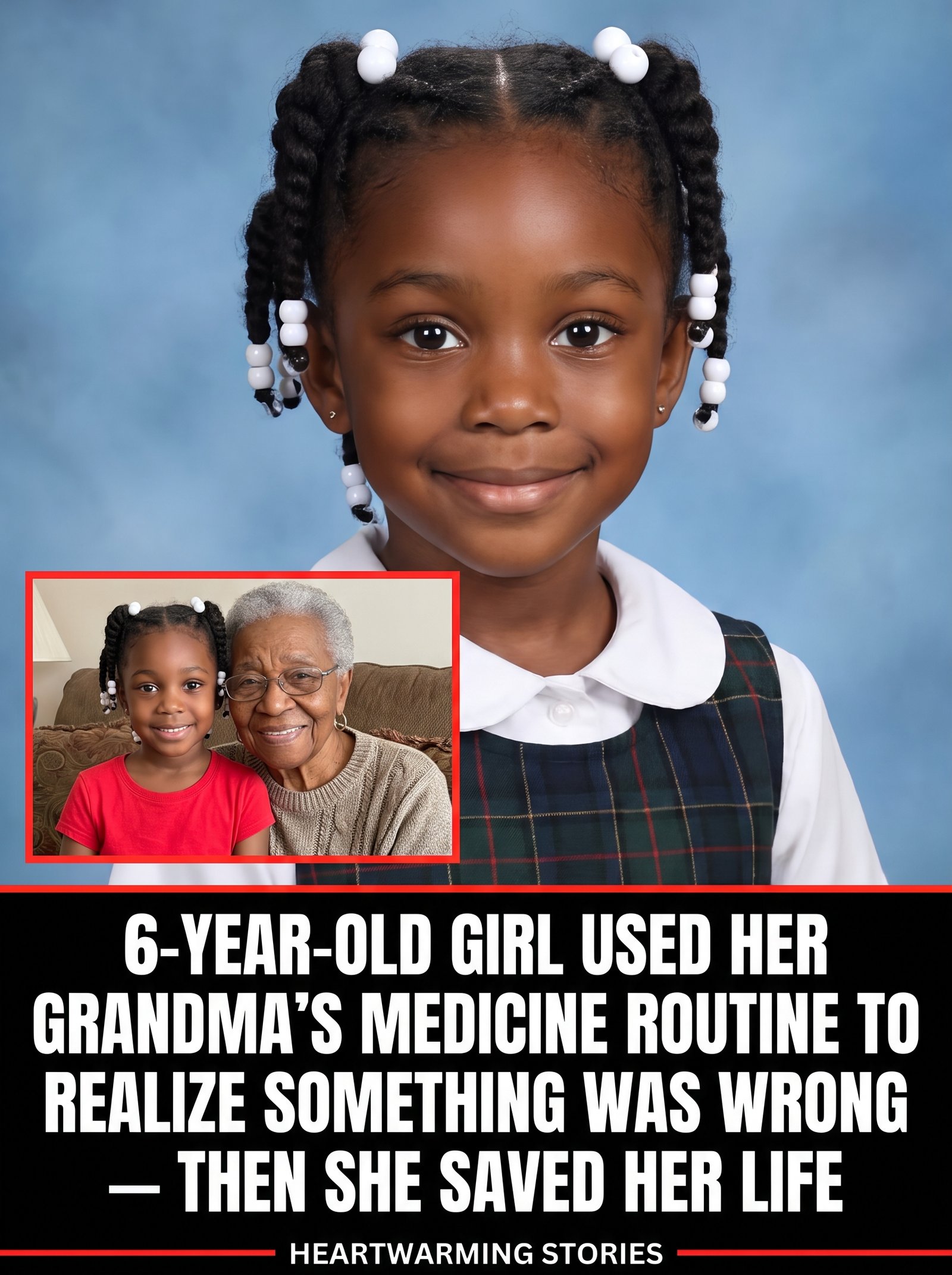
Every afternoon at exactly four o’clock, my granddaughter Amaya watched me take my medicine.
She was only six years old, but she treated my pill routine like part of her daily schedule.
She would bring me my glass of water, stand beside my chair, and sometimes remind me which compartment I had already opened.
At first, we thought it was cute.
Later, we realized it may have saved my life.
That afternoon, I had been feeling tired.
Much more tired than usual.
I remember lowering myself into my chair and meaning to take my medication after resting for a minute.
I do not remember anything after that.
What happened next, I learned from Amaya and our neighbor, Mrs. Evans.
Amaya came into the living room and saw me slumped in my chair.
At first, she thought I had fallen asleep.
Then she looked at the pill organizer on the side table and saw that the afternoon compartment was still full.
That was unusual.
She softly said, “Grandma?”
When I did not answer, she touched my arm.
Still nothing.
Then she tried to wake me again.
When I did not respond normally, she became frightened.
But instead of freezing, she remembered what I had shown her months earlier.
Inside our kitchen, on the counter, was a folded emergency contact card.
I had made it after a hospital visit the year before.
It contained my name, medical conditions, medications, allergies, my doctor’s number, and emergency contacts.
I kept telling myself it was only a precaution.
Amaya ran to the kitchen, grabbed the card, and called for our neighbor, Mrs. Evans, who was often home next door in the afternoons.
Mrs. Evans heard the panic in her voice and came immediately.
When she entered the house and saw me in the chair, she understood it was serious.
She called 911 and read the information directly from the emergency card while Amaya stood beside her.
Paramedics arrived quickly.
By then, I was in a dangerous state brought on by missed medication and a developing diabetic emergency.
At the hospital, the doctors stabilized me.
Later, one of them told my daughter something I will never forget:
“If that little girl hadn’t recognized the change and gotten help so quickly, this could have ended very differently.”
I cried when I heard that.
Not because I was scared by what almost happened.
But because my six-year-old granddaughter had paid such close attention to the ordinary details of my life that she knew, immediately, when something was wrong.
Most adults would notice a person slumped in a chair.
But Amaya noticed something even earlier:
the full pill compartment,
the untouched glass of water,
the broken routine.
That small observation changed everything.
When I returned home from the hospital, Amaya met me at the door holding my cardigan and smiling nervously.
I hugged her as tightly as I could.
“You saved me,” I told her.
She shook her head.
“I just did what you said.”
That made me cry even harder.
A week later, our family bought Amaya a small bracelet engraved with the words:
Grandma’s Little Hero
She wears it proudly.
But the truth is, no bracelet could fully capture what she gave me.
She gave me more time.
More birthdays.
More afternoons.
More chances to sit beside her and watch her grow.
Now, every day at four o’clock, she still brings me my water.
Only now, after I take my medicine, I smile at her and say the same thing every single time:
“Thank you for watching over me.”
And she always answers the same way:
“I always will.”