I was carrying groceries into my house when I heard a child screaming from across the street.
Smoke was pouring from my neighbor’s garage.
My name is Harold.
I’m seventy-six years old.
I have a bad hip, one hearing aid, and enough common sense to know I should have waited for firefighters.
But then I heard the boy again.
I ran across the street.
A woman was standing in the driveway screaming that her grandson was inside.
The garage door was partly open.
I crawled underneath.
The smoke burned my eyes.
I found the boy beside an old workbench.
He was crying and coughing but conscious.
I wrapped my shirt around him and carried him toward the light.
By the time we reached the driveway, my legs gave out.
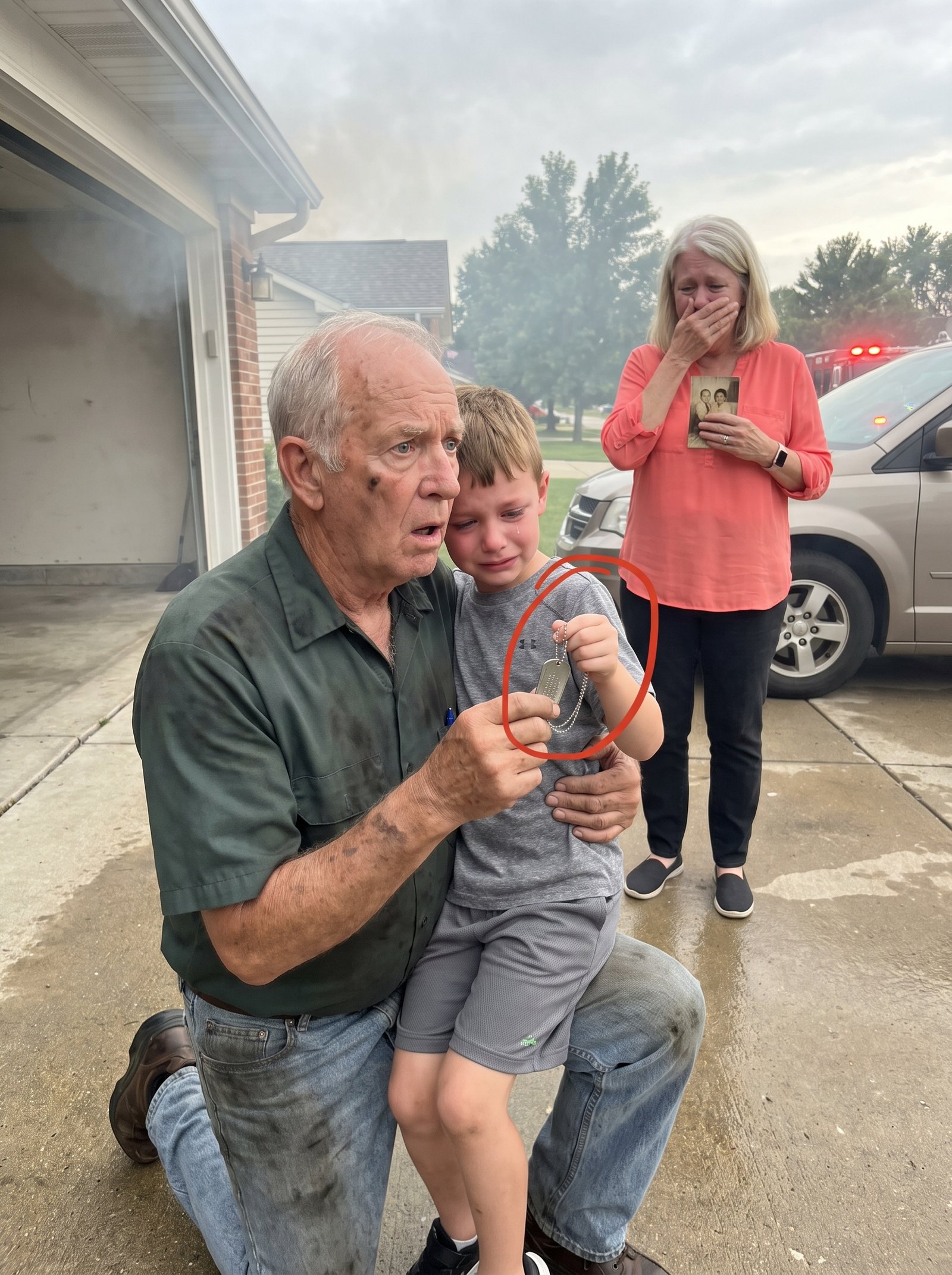
I dropped to my knees.
The boy clung to my neck.
Then he stared at my face.
“Michael?”
I froze.
“What did you say?”
Nobody had called me that name in forty-one years.
Michael was my son.
He died when he was twenty-three.
The boy reached inside his shirt and pulled out an old dog tag.
Michael’s full name was stamped into the metal.
I stared at it.
“Where did you get that?”
His grandmother stopped crying.
“My daughter gave it to him.”
Then she removed an old photograph from her wallet.
It showed Michael standing beside a young pregnant woman.
On the back was his handwriting.
DAD, IF I DON’T MAKE IT HOME, PLEASE FIND HER.
The woman in the picture was named Carol.
She had been nineteen when she met Michael.
She was pregnant and alone.
The baby’s father had disappeared, and Carol’s family had told her not to come home.
Michael helped her find a small apartment.
He paid part of her rent.
He brought groceries.
Eventually, he told her he wanted to help raise the child.
“Michael said being a father was something a man decided to do,” Carol’s mother told me.
I sat on the driveway holding the boy.
I had never known.
Michael had wanted to tell me.
But he was afraid.
I had been hard on him.
I spent years telling him to stop drifting, find a career, and “build a real life.”
He thought I would see Carol and her baby as another mistake.
Then Michael died suddenly in a workplace accident.
He had written me a letter days before.
My wife, Susan, found it among his belongings.
She went looking for Carol.
She found her.
Carol had recently given birth to a boy named Daniel.
Susan wanted to bring them to me.
Carol refused.
“She thought you would reject them,” her mother said. “Or worse, try to take over because Michael was gone.”
Susan respected her decision.
But she never disappeared from their lives.
For more than thirty years, my wife quietly visited Carol and Daniel.
She attended Daniel’s high-school graduation.
She sent birthday cards.
When Daniel married, Susan was there.
When his son Caleb was born, Susan held him.
Caleb was the boy sitting in my arms.
My wife had known him.
I had lived six blocks away and never knew he existed.
I felt angry.
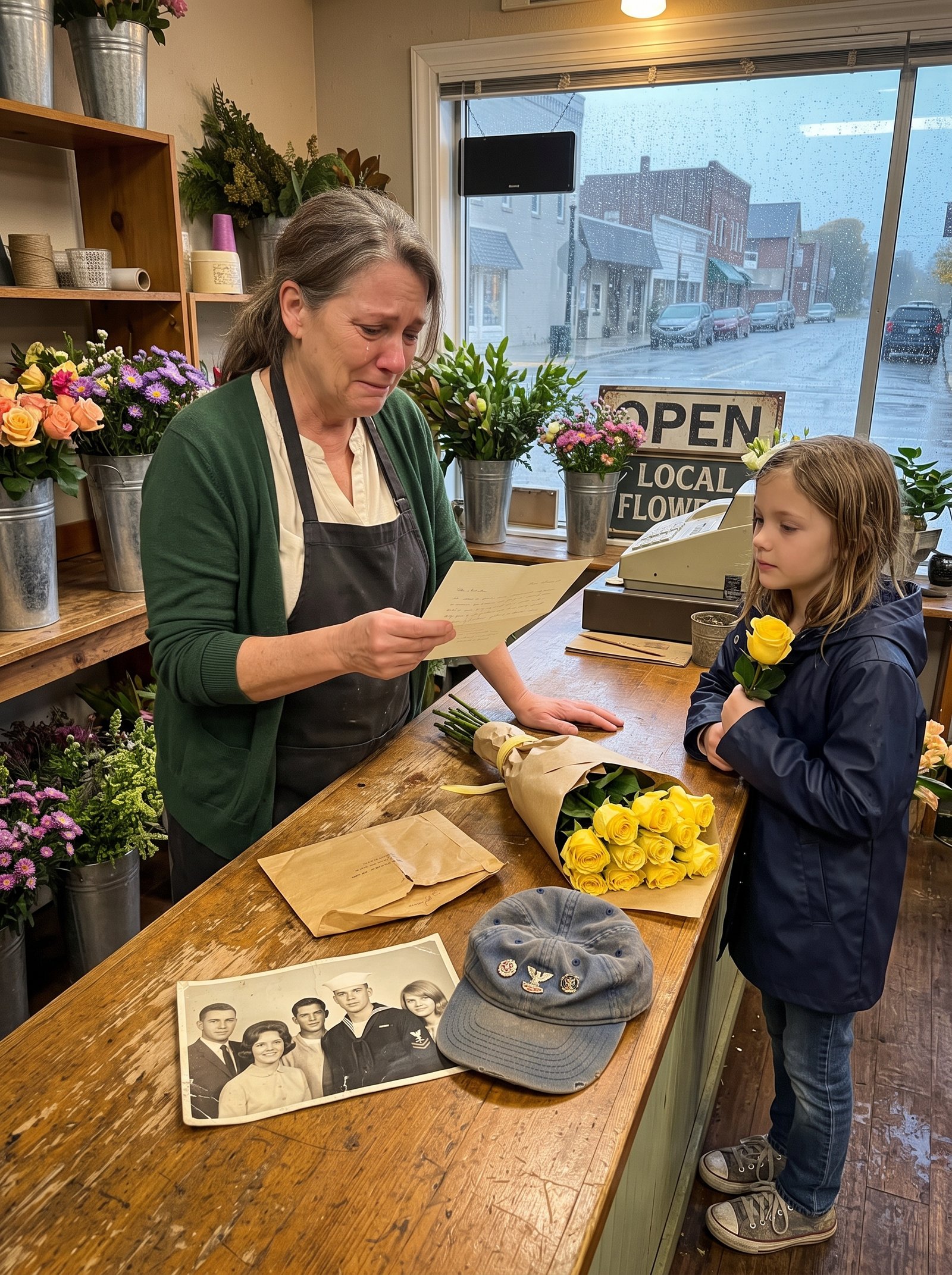
Then Carol’s mother handed me an envelope.
Susan had written my name across the front.
She had died eleven years earlier.
Inside was a letter.
Harold,
If you ever learn about Carol and Daniel, you may be angry with me. You have every right to be.
But Michael trusted me with something you were not ready to understand then.
I stopped reading.
The grandmother continued for me.
Our son did become the man you wanted him to be. He just did it in a way neither of us expected. He saw a frightened young woman and an unborn child and decided their lives mattered to him.
My hands shook.
Then came the sentence that broke me.
Please do not mourn the family Michael never had. He had one. You just haven’t met them yet.
Three days after the garage fire, Carol came to my house.
She was sixty now.
When I opened the door, neither of us spoke.
Then she handed me Michael’s old baseball glove.
“He kept this in our apartment,” she said.
We sat at my kitchen table for hours.
She told me about Michael bringing groceries after work.
About the crib he built from used lumber.
About the name he helped choose for Daniel.
She told me Daniel had grown up considering Michael his first father, even though he had no memories of him.
Daniel arrived later that evening.
He was forty-one.
He looked nothing like Michael.
But when he laughed, something in the room changed.
Then Caleb walked in behind him wearing the dog tag.
“Grandpa Harold?”
I looked at Daniel.
He smiled.
“If that’s okay.”
I had spent forty-one years grieving the son I lost.
I never imagined that somewhere nearby, a family was carrying his kindness forward.
The garage was repaired.
Caleb recovered completely.
And every Sunday now, Carol, Daniel, his wife, and Caleb come to my house for dinner.
Michael’s dog tag no longer hangs around Caleb’s neck every day.
We placed it inside a small shadow box with the photograph and Susan’s letter.
Underneath, Daniel added a sentence:
HE DIDN’T GET ENOUGH YEARS TO RAISE A FAMILY—SO HIS KINDNESS DID IT FOR HIM.
For most of my life, I believed my son died before he had a chance to become the man he was supposed to be.
I was wrong.
He already had.