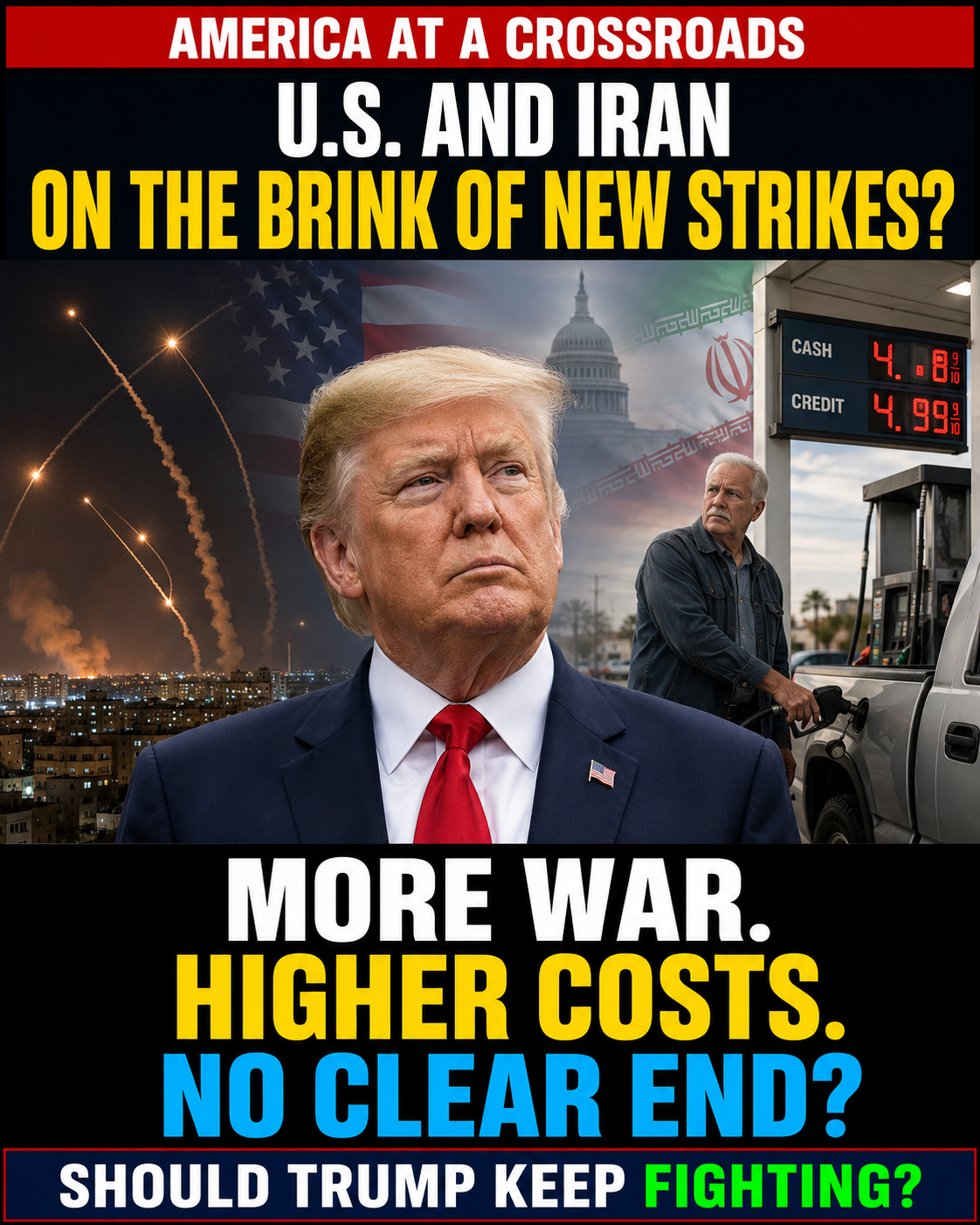
The United States and Iran exchanged another round of missile strikes Thursday, renewing fears that the conflict could expand across the Middle East after hopes for a rapid diplomatic solution began to fade.
The latest attacks followed a brief reduction in fighting that had encouraged speculation about a possible longer pause.
Instead, missile barrages resumed.
Jordan said it intercepted Iranian missiles for a second consecutive day. Kuwait reported that a strike in the northern part of the country killed one person.
The renewed fighting has increased concerns that countries surrounding Iran could become more deeply involved, whether voluntarily or simply because missiles and military operations are crossing their territory.
Why the United States is continuing its campaign
The Trump administration has argued that sustained military pressure is necessary to reduce Iran’s ability to threaten American forces and U.S. allies.
The U.S. military launched Operation Epic Fury against Iran on February 28, 2026. The Department of Defense has described its goal as dismantling elements of Iran’s security apparatus and targeting locations it says pose an imminent threat.
Supporters of the campaign say ending military operations before Iran’s capabilities are sufficiently weakened could allow the country to rebuild, retaliate later and claim that it successfully resisted the United States.
They also argue that the president must retain the ability to respond quickly when U.S. military personnel or strategic interests face danger.
For those supporters, withdrawing before a durable agreement is reached could create greater risks in the future.
Why public concern is increasing
Critics say the administration has not provided a sufficiently clear explanation of what final victory would look like.
They are asking whether the objective is to destroy specific military capabilities, force Iran into a new agreement, weaken the country’s government or continue fighting until Iran completely abandons its regional strategy.
Without a defined end point, opponents fear that what began as a limited operation could become a prolonged and expensive war.
The economic impact is also becoming harder for Americans to ignore.
AP-NORC polling conducted earlier in the conflict found low public trust in Trump’s decisions involving military force and nuclear weapons. Another survey in June found that 37% approved of Trump’s overall performance, while 34% approved of his handling of Iran.
Earlier AP-NORC research also found that approval of Trump’s handling of the economy declined as gasoline prices rose during the Iran conflict.
Could the conflict expand?
The involvement of neighboring countries is one of the largest immediate concerns.
Jordan’s interception of Iranian missiles demonstrates how countries that are not the central participants can still be pulled into the conflict.
The reported strike in Kuwait shows the danger of military actions spreading beyond their intended targets or geographic limits.
Each additional country affected creates new pressure for retaliation, stronger defenses or greater cooperation with American military operations.
That can produce a chain reaction in which even governments that want to avoid war feel compelled to become involved.
The risk is not limited to missiles.
A prolonged conflict could affect energy transportation, commercial shipping, American military bases and global oil markets.
Even without direct attacks inside the United States, American families could feel the effects through fuel costs, government spending and continued uncertainty in the economy.
What role should Congress have?
The fighting is also renewing debate about presidential war powers.
Supporters of strong executive authority say military decisions often must be made quickly and cannot always wait for a prolonged congressional process.
Critics argue that a large or open-ended military campaign should require more direct authorization and oversight from Congress.
They say lawmakers should be required to debate the objectives, financial costs, possible duration and conditions for ending the operation.
The disagreement is larger than support or opposition to President Trump.
It involves a constitutional question that has appeared repeatedly under presidents from both parties:
How long should a president be permitted to conduct major military operations without a new and specific vote from Congress?
The political consequences
The renewed strikes arrive only months before the November 2026 midterm elections.
Voters will decide control of the House of Representatives, part of the Senate and key offices across the country.
Republican candidates may argue that strong military pressure is necessary to defend the country and prevent Iran from becoming more dangerous.
Democratic candidates are likely to focus on the absence of a clear exit strategy, the economic burden of the war and the need for greater congressional oversight.
Independent voters could become particularly important.
Recent AP-NORC analysis found that Trump lost support among independents over the course of his second term, including during the Iran war period.
What happens next?
For now, neither side appears prepared to step back permanently.
The United States believes continued pressure can force Iran to accept stronger limits and reduce its ability to threaten American interests.
Iran appears determined to demonstrate that military action will not force it into surrender.
That leaves diplomats with a shrinking window to prevent further escalation.
A temporary ceasefire could create time for negotiations, but it would not resolve the fundamental disagreement over Iran’s military power, regional influence and relationship with the United States.
President Trump now faces one of the most consequential decisions of his second term.
Continuing the campaign could increase pressure on Iran, but it could also bring additional casualties, rising costs and a wider regional conflict.
Seeking an immediate agreement could reduce those risks, but critics of diplomacy may see it as allowing Iran to escape before American objectives have been achieved.
The central question for voters is becoming increasingly direct:
How much longer should America continue a war when its final destination remains unclear?