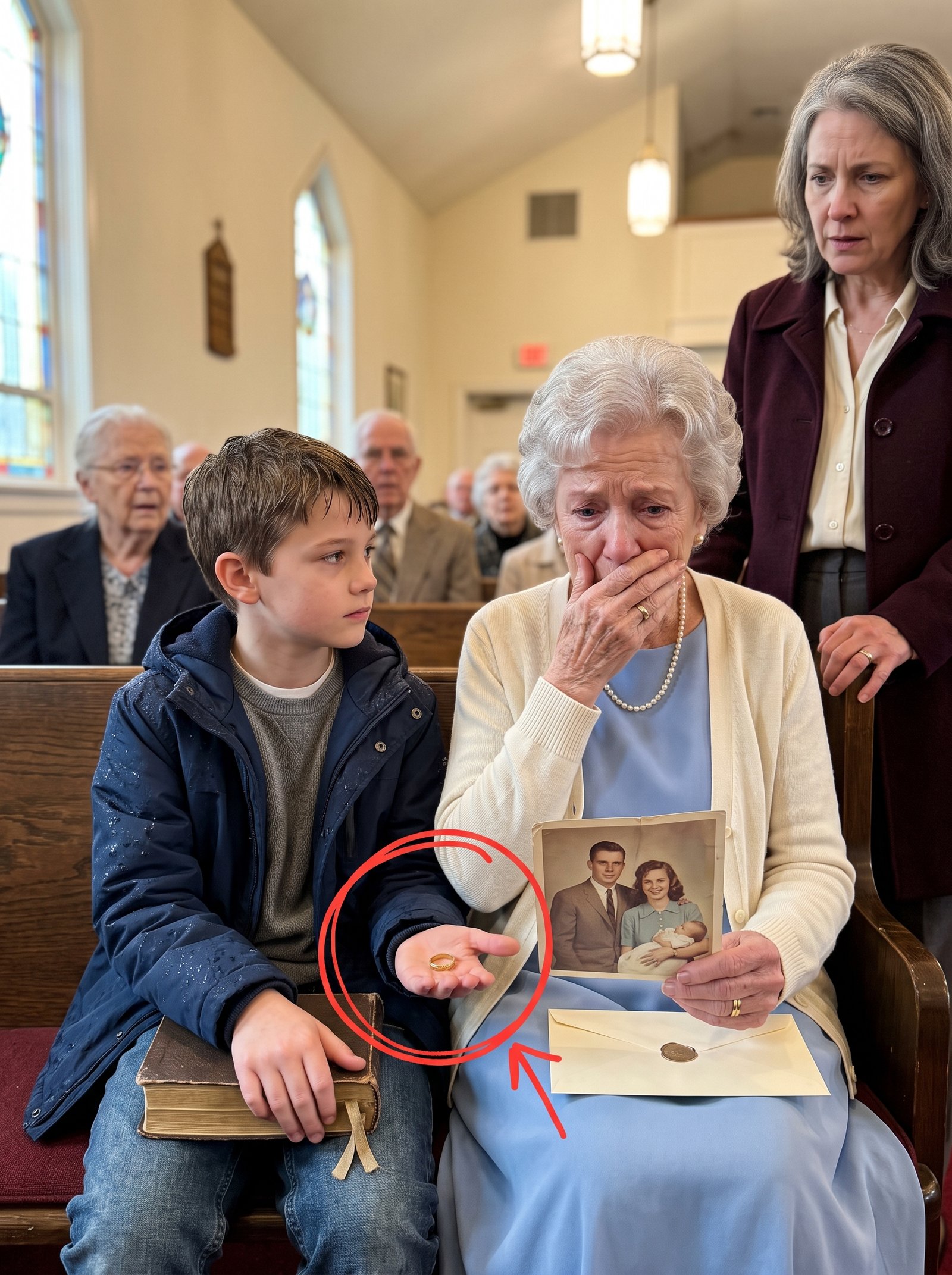
Every morning at exactly 7:15, my eighty-two-year-old mother carried two cups of coffee onto her front porch.
She drank one.
The other always went cold.
My father, Jack, had died four years earlier.
They had been married for fifty-nine years.
Every morning of their marriage, Dad sat in the same wooden chair beside Mom and drank coffee before the town was fully awake.
After he died, Mom kept making his cup.
One for her.
One for him.
Last Tuesday, I arrived early to take her to an appointment.
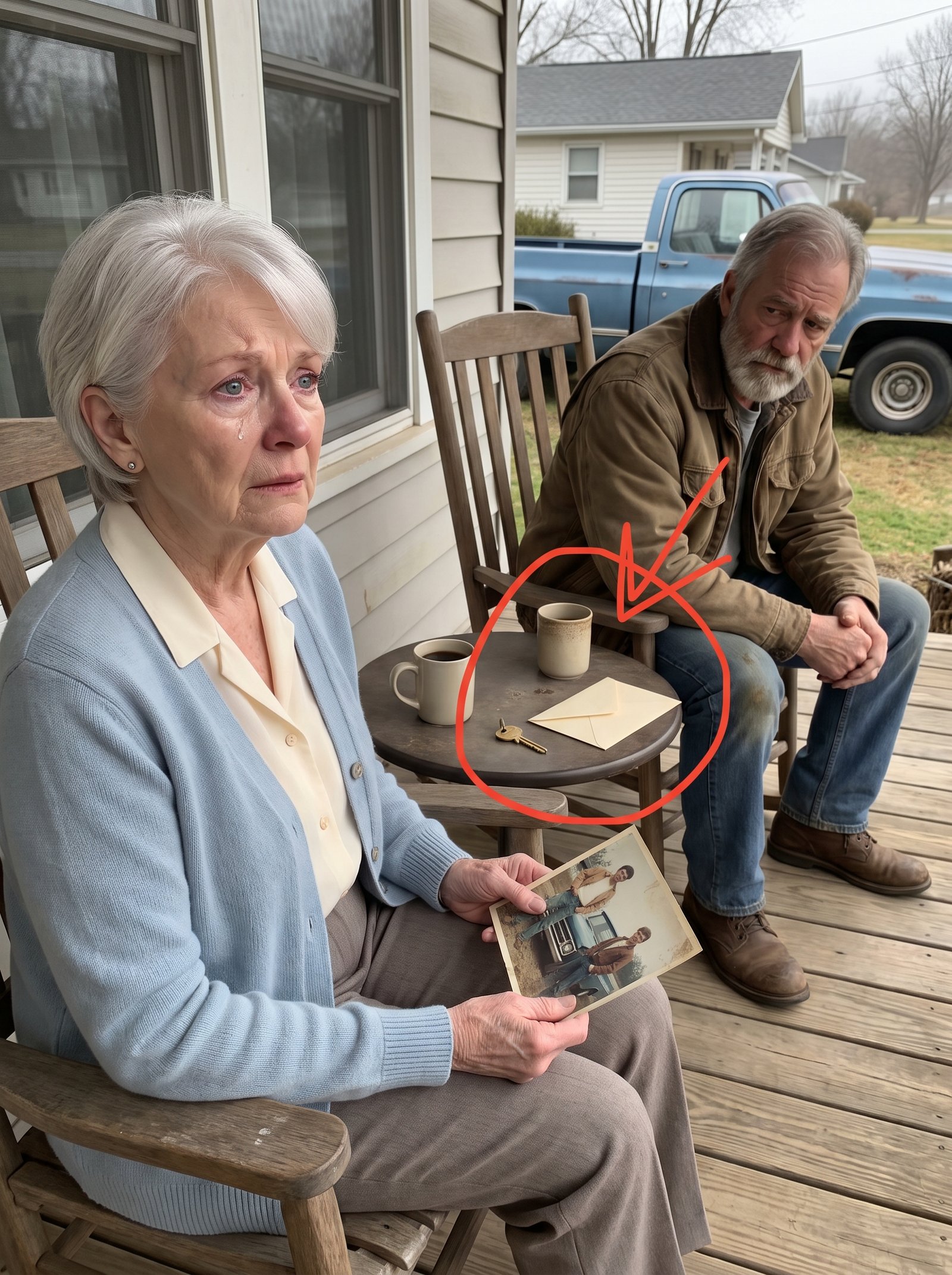
A faded blue pickup stopped across the street.
A man stepped out.
He looked to be in his late sixties and stood staring at our house before slowly walking toward the porch.
“Are you Evelyn Carter?” he asked.
Mom nodded.
He handed her an old photograph.
It showed Dad as a young man standing beside another young man in front of a damaged pickup.
On the back was Dad’s handwriting.
The man looked toward Dad’s empty chair.
“May I sit there?”
Nobody had sat in it since the funeral.
Mom eventually nodded.
The stranger introduced himself as Robert.
Then he placed a brass key and sealed envelope beside Dad’s untouched coffee.
“I owe your husband my life,” he said.
Mom opened the envelope.
After reading three lines, she looked at him.
“You’re the reason Jack disappeared for six months in 1978.”
Robert lowered his head.
“Yes.”
He had been twenty-two then.
His truck had broken down outside town during one of the worst periods of his life.
He had lost his job.
His landlord had evicted him.
His relationship with his family had collapsed.
Dad found him sitting beside the road.
Instead of simply repairing the truck, Dad bought him dinner.
The next morning, he returned.
He found Robert temporary work with a local contractor and helped him rent a small room.
At night, Dad repaired Robert’s truck in an old workshop.
Robert had been deeply ashamed of needing help.
He made Dad promise not to tell anyone.
That explained the months when Dad came home late and refused to say where he had been.
Mom had always believed he was working extra jobs.
“He never betrayed you,” Robert said. “He was protecting my pride.”
Mom stared at Dad’s chair.
“That sounds exactly like Jack.”
Robert eventually became a mechanic.
He opened his own small garage and spent decades helping other stranded drivers.
He attempted several times to repay Dad.
Dad always refused.
Then, twenty years earlier, Dad gave him the brass key.
It opened a metal box hidden inside his old workshop.
“Jack told me not to open it until he was gone,” Robert said. “He said I had to stop thinking of kindness as a debt first.”
We drove to the workshop that afternoon.
The building had not been used since Dad became ill.
Behind an old workbench, Robert found a small metal box.
The key fit.
Inside were photographs, letters, and a notebook.
The notebook contained names.
Dozens of them.
People Dad had quietly helped over the years.
A young mother whose car he repaired for free.
A teenager he helped get his first job.
An elderly neighbor whose furnace stopped working.
A veteran who needed a ride to appointments.
Robert’s name was the first one.
Beside it Dad had written:
Robert taught me something important. People will accept help more easily when you let them keep their dignity.
At the bottom of the box was another envelope.
This one was addressed to Robert.
Dad had written:
If you are finally reading this, I hope you understand you never owed me anything. But Evelyn may be sitting alone now, and she has spent her whole life taking care of other people. Maybe it is your turn to bring the coffee.
Robert stopped reading.
Mom began to laugh through her tears.
For the first time since Dad died, someone else sat in his chair the next morning.
Robert arrived at 7:10 carrying a paper bag of cinnamon rolls.
He brought his own coffee.
Mom still made Dad’s cup.
But she no longer let it grow cold untouched.
She poured a little of it into the flower bed beside the porch.
“That one is still Jack’s,” she said.
Then she refilled the mug for Robert.
The visits became a weekly routine.
Robert repaired Mom’s porch railing.
Mom gave him several of Dad’s old tools.
Eventually, Robert began bringing young mechanics from his garage to the workshop.
Together, they created a small free repair program for elderly people who could not afford basic car maintenance.
They named it Jack’s Garage Morning.
Every Saturday, coffee was served at 7:15.
One cup was always placed on Dad’s old workbench.
Not because anyone expected him to return.
But because everyone there understood what it represented.
Robert had spent forty-six years thinking he owed Dad a debt.
Dad had never seen it that way.
He had simply believed that when someone sits beside you during the worst part of your life, the best repayment is to sit beside someone else when their turn comes.
Mom still drinks coffee on the porch every morning.
There are still two chairs.
But now, the second one is no longer empty.