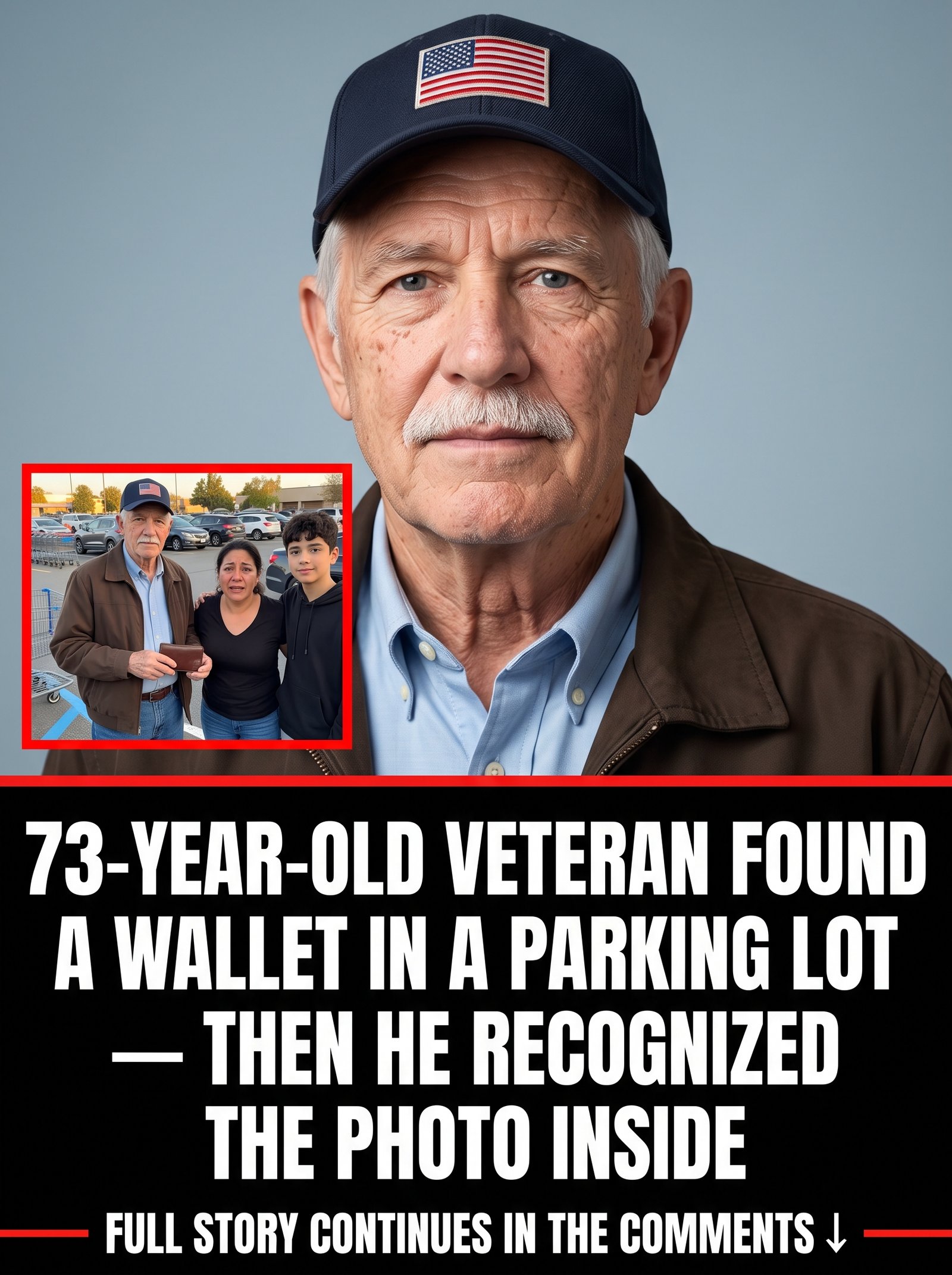
Harold had just finished buying groceries when he spotted an old brown leather wallet near a shopping cart.
He almost walked past it.
Then he turned around.
At seventy-three, Harold had learned that small things were often important to someone.
He picked it up and opened it.
There was no money inside.
Only a driver’s license, several receipts, and one faded photograph.
The moment Harold saw it, he stopped breathing for a second.
Two young soldiers stood in the picture.
One of them was Harold.
The other was Miguel Alvarez.
Harold had not seen that photograph in more than fifty years.
He had not seen Miguel since they returned home from Vietnam.
Harold walked back into the store and handed the wallet to customer service.
Then he asked whether they could contact the person whose license was inside.
About twenty minutes later, a woman in her forties hurried across the parking lot with a teenage boy beside her.
“My wallet?”
Harold handed it to her.
Then he asked:
“Who is the man in the photograph?”
She looked confused.
“My father.”
“What was his name?”
“Miguel.”
Harold lowered his head.
The woman immediately noticed.
“You knew him?”
Harold smiled faintly.
“He saved my life.”
Her name was Elena.
Miguel had died six years earlier.
She had heard very little about his time in the military.
Her father rarely discussed it.
Harold explained what happened.
In April 1971, their vehicle was struck during an operation.
Harold was injured and unable to move on his own.
Miguel refused to leave him.
He pulled Harold away from the wreckage and stayed beside him until help arrived.
Harold eventually returned home.
Miguel did too.
But they lost contact.
Elena stared at him.
“My father never told us.”
“That sounds like him,” Harold said.
Then Harold reached into his own wallet.
He removed a tiny piece of paper that had been folded so many times the edges were soft.
Miguel had written it decades earlier.
It said:
If I ever don’t make it back, tell my family I wasn’t afraid.
Elena began crying.
Her son looked at Harold.
“Why did you keep it?”
Harold answered:
“Because I was waiting to give it back.”
Then Elena noticed something unusual in her father’s old wallet.
Behind the photograph was a second folded note.
She had never seen it.
Harold opened it.
The handwriting was Miguel’s.
The note was addressed to him.
Harold, if you ever find this, then I guess one of us finally got lucky enough to find the other.
Harold laughed and cried at the same time.
The note explained that Miguel had carried the photograph for decades too.
He had often wondered what happened to Harold.
He wrote:
You always said we owed each other nothing because we both did what we had to do. I never agreed. You gave me someone to come home with in my memory.
Elena invited Harold to dinner.
That first dinner became another.
Then another.
Harold met Miguel’s grandchildren.
He brought old photographs.
Elena showed him boxes of her father’s things.
The teenage boy, Lucas, began asking Harold questions about the grandfather he barely remembered.
Harold answered what he could.
Some stories were funny.
Some were painful.
Others were simply ordinary memories of two young men who wanted to survive long enough to go home.
Months later, Elena gave Harold a framed copy of the parking-lot photograph.
Below it, she placed both notes.
Harold hung it above his kitchen table.
When people asked about it, he never said:
“That’s the man who saved my life.”
Instead he said:
“That’s my friend Miguel.”
Because after fifty years, a lost wallet had returned something far more important than identification.
It returned a friendship to the family that had inherited it.