For forty-three years, Joe drove the same yellow school bus through our county.
He remembered every child’s name.
He remembered which dogs chased the bus, which parents worked nights, and which children needed an extra minute to reach the road in winter.
But there was one stop he never skipped.
Even after the family moved away.
Every afternoon at 3:42, Joe stopped in front of the old Miller farmhouse, opened the doors, waited ten seconds, and closed them again.
No child had lived there for almost thirty years.
When younger drivers teased him, Joe always answered the same way.
“A promise is still a promise when nobody is watching.”
Last Friday was his final route before retirement.
Joe was seventy-three.
I rode along because I had worked with him for twenty years.
Everything went normally until we reached Miller Road.
The farmhouse stood empty beneath bare trees.
Joe slowed the bus.
“Last time,” he whispered.
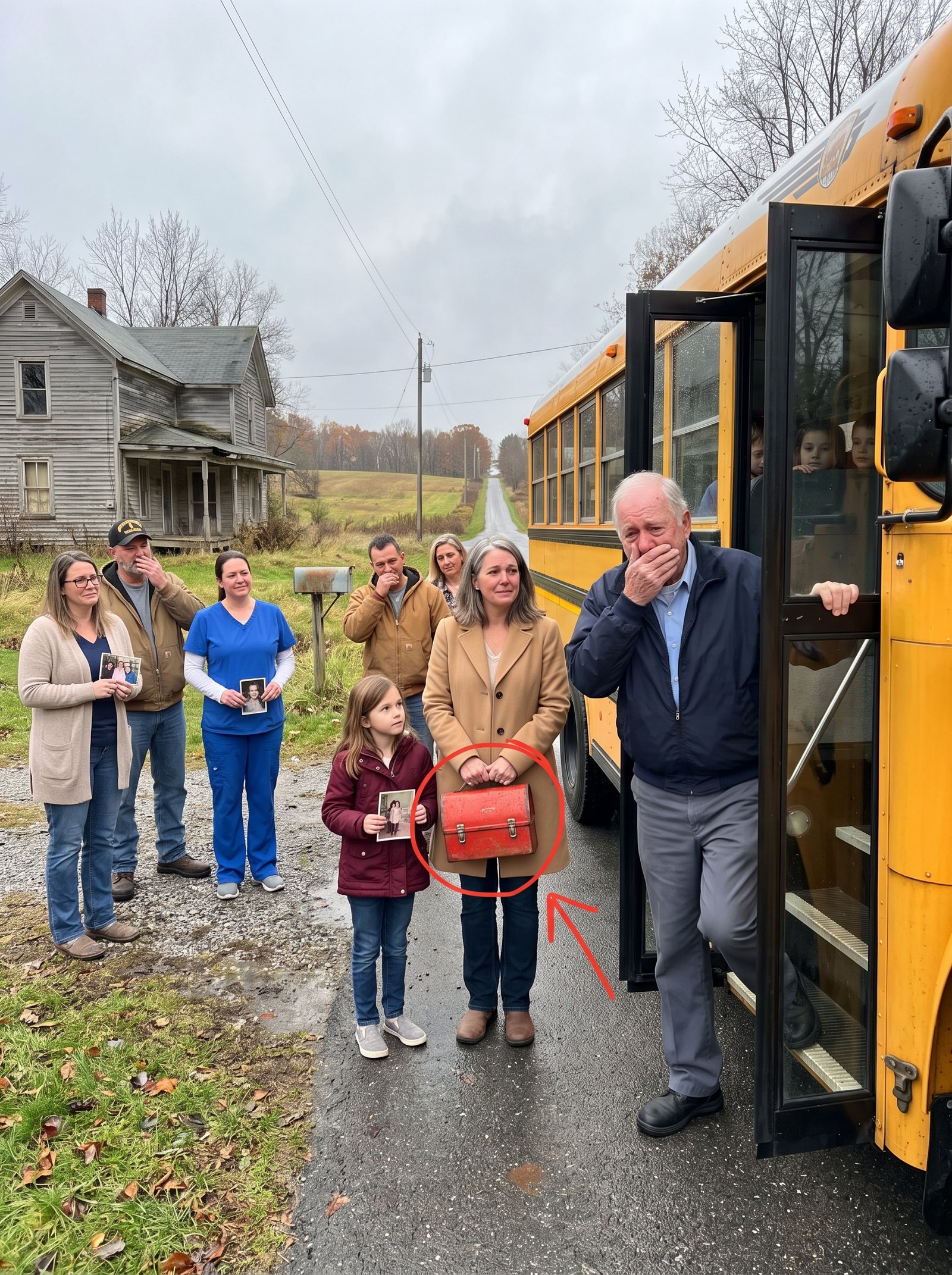
At exactly 3:42, he opened the doors.
Then the farmhouse door opened too.
A woman stepped onto the porch carrying an old red lunchbox.
Behind her came another person.
Then another.
Twenty-six adults eventually filled the yard.
Some held childhood photographs.
One wore an Army veteran cap.
Another had come directly from the hospital in blue scrubs.
Joe stared through the windshield.
Then a little girl climbed aboard and handed him a photograph.
It showed Joe nearly forty years earlier, kneeling beside a boy in the snow and removing his own winter coat.
Behind it someone had written:
MR. JOE, YOU THOUGHT YOU WERE ONLY DRIVING US TO SCHOOL. YOU WERE DRIVING SOME OF US TOWARD A LIFE WE DIDN’T KNOW WE COULD HAVE.
Joe covered his mouth.
The woman with the lunchbox stepped onto the bus.
“Sarah?”
She nodded.
Joe had not seen her since 1986.
Sarah had been eleven when her family moved into the Miller farmhouse.
Her father had lost his job, and her mother worked nights.
Some mornings, Sarah and her brothers arrived at the bus without breakfast.
Joe noticed.
He began keeping the red lunchbox beside his seat.
Inside were sandwiches, apples, crackers, and occasionally money for school lunch.
“If somebody forgot breakfast,” he would say, “take what you need.”
He never asked who took anything.
Then came the winter morning that changed the route.
Sarah’s seven-year-old brother reached the bus wearing thin sneakers with holes in them.
The temperature was well below freezing.
Joe finished the morning route, bought boots and a winter coat, and left them with the school secretary.
He made Sarah promise not to tell anyone.
“I didn’t want him thinking he owed me something,” Joe explained years later.
The promise expanded.
Whenever Joe noticed a child struggling, he found a quiet way to help.
Sometimes it was gloves.
Sometimes school supplies.
Once it was a used bicycle so a teenager could get to a summer job.
Another time, he bought a young man his first pair of proper work boots.
His wife, Margaret, helped.
She packed sandwiches before sunrise and hunted through yard sales for coats that still had years of wear left in them.
They never kept records.
At least Joe thought they didn’t.
When Margaret died five years earlier, Joe continued stopping at the farmhouse.
It was where they had first decided that no child riding his bus should feel ashamed of being hungry or cold.
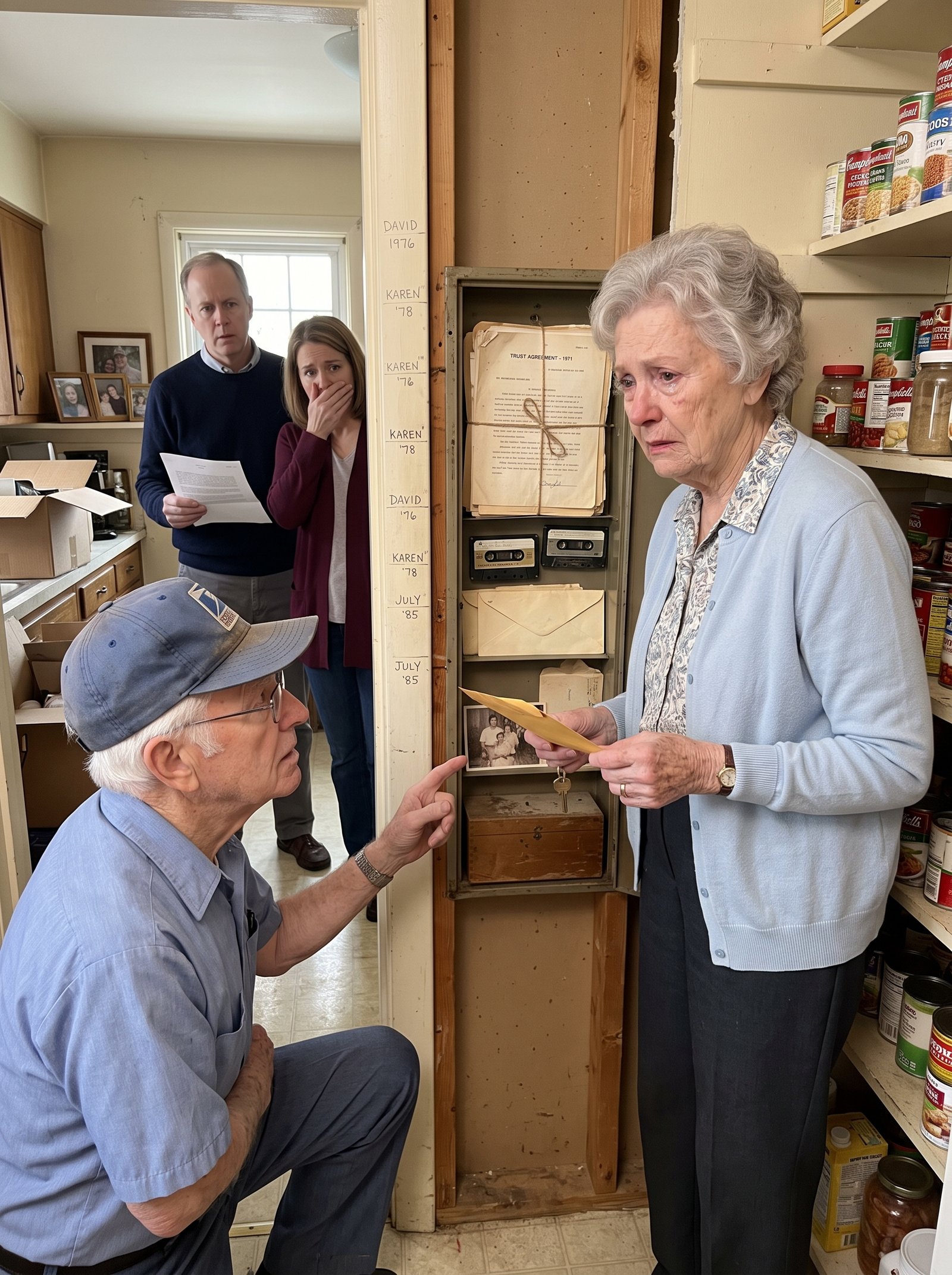
Sarah opened the red lunchbox.
Inside were dozens of folded pieces of paper.
Each carried a former student’s name.
After learning Joe was retiring, Sarah had found twenty-five others.
One was now a nurse.
One owned an auto-repair shop.
One had become an elementary-school teacher.
Another served in the Army and later returned home to raise three children.
Every one remembered Joe.
The veteran stepped forward.
“When I was seventeen, my father left,” he said. “You found me a job at your brother’s garage.”
The nurse wiped her eyes.
“You paid for my graduation shoes. I knew it was you even though you told the principal not to say.”
Then an older man approached carrying a tiny wooden chair.
“You made this for me when I was six,” he said. “My mom couldn’t afford furniture after we moved into an apartment.”
Joe looked toward the ground.
“I didn’t do anything special.”
Twenty-six people immediately disagreed.
Then Sarah removed one final envelope from the lunchbox.
The handwriting belonged to Margaret.
Joe’s hands began trembling.
Margaret had written the letter shortly before she died.
She knew Joe would eventually retire.
She had asked Sarah, if she could ever find her, to gather as many former children as possible.
But not simply to thank him.
Margaret had another idea.
Joe spent his life helping one child at a time because that was what we could afford, she wrote.
If enough of you remember, maybe you can help the next child together.
Sarah looked toward the old farmhouse.
The property had recently been donated to the county after sitting empty for years.
The twenty-six former students had already formed a nonprofit.
They planned to restore the farmhouse and turn it into a small community resource center for local children.
There would be a pantry with free food.
A closet filled with winter coats and shoes.
A room for homework.
A workshop where teenagers could learn basic repair skills.
And a shelf near the entrance would always hold one red lunchbox.
They had already chosen the name:
JOE’S LAST STOP.
Joe sat silently behind the steering wheel.
Then the little girl beside Sarah asked him a question.
“Mr. Joe, will you help us?”
For the first time all afternoon, he smiled.
“I suppose retirement can wait until Monday.”
Everyone laughed.
Three months later, Joe’s Last Stop opened.
The first child through the door was a thirteen-year-old boy looking for a winter coat.
Joe helped him find one.
When the boy asked how much it cost, Joe gave the same answer he had given children on his bus for decades.
“Nothing. Just remember somebody else someday.”
The old yellow bus no longer stops at the farmhouse at 3:42.
It doesn’t need to.
The doors are already open.