For twenty-seven years, my mother reserved the same empty seat beside her at church.
No one was allowed to sit there.
My brother, Thomas, disappeared when he was twenty-four.
He had left home after a terrible argument with our father.
“You’ll come crawling back when you need us,” Dad shouted as Thomas walked toward the door.
Thomas stopped and looked at Mom.
“I’ll come back when I can make you proud.”
That was the last time we saw him.
He never called, and the police found no sign of him.
Dad died believing Thomas had abandoned the family.
Mom never accepted it.
Every Sunday, she placed Thomas’s childhood Bible on the pew beside her.
“That seat is his,” she would say. “He’ll need somewhere to sit when he comes home.”
Years passed.
Mom’s hair turned white, and eventually I had to help her walk down the aisle.
But the seat remained empty.
Then, on Mom’s eighty-first birthday, the church held a small service in her honor.
Just as the pastor began speaking, the back doors opened.
A boy of about twelve entered alone.
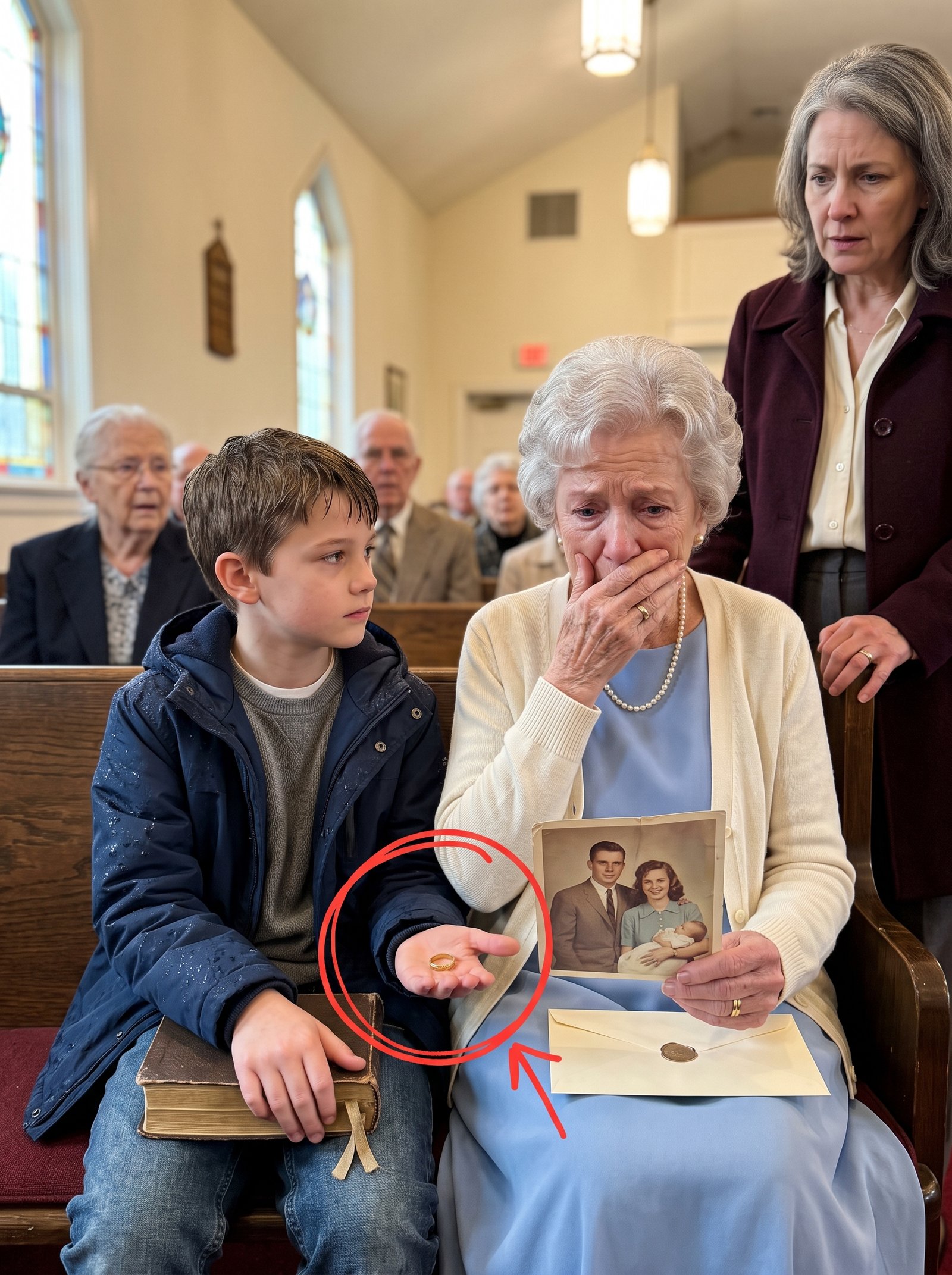
His clothes were wet from the rain, and he held an old photograph against his chest.
He walked directly toward Mom’s pew.
“I’m sorry,” I said, stepping into the aisle. “That seat is reserved.”
“For Thomas?” he asked.
Mom’s head lifted.
“How do you know that name?”
The boy opened his hand.
A worn gold wedding ring rested in his palm.
Mom recognized the engraving inside it.
Thomas’s name—and the date he had disappeared.
“Where did you get my son’s ring?” she whispered.
“My father gave it to me before he died.”
The boy handed her the photograph.
It showed Thomas beside a young woman holding a newborn baby.
On the back, Thomas had written:
MOM, I FOUND MY WAY HOME. I WAS JUST TOO ASHAMED TO KNOCK.
The boy pointed to the baby.
“That was my father.”
His name was Noah.
His father, Daniel, had not been Thomas’s biological son.
Shortly after Thomas left home, he found Daniel’s mother, Rebecca, sleeping in an old car with her newborn baby.
Her family had rejected her, and she had nowhere safe to go.
Thomas bought them food and helped Rebecca find temporary housing.
He worked two jobs to pay the deposit on a small apartment.
Eventually, Thomas and Rebecca married.
He raised Daniel as his own.
“Grandpa Thomas never called Dad his stepson,” Noah said. “He only called him his boy.”
Mom pressed the photograph against her chest.
“Why didn’t Thomas come home?”
Noah removed a sealed letter from his coat.
Thomas had tried.
Seven years after leaving, he wrote to our father and asked whether he could bring Rebecca and Daniel home for Christmas.
Dad replied that Thomas could return only if he came alone.
He wrote that Rebecca’s past would embarrass the family and that Daniel was not truly Thomas’s child.
Thomas refused.
He sent one final response:
A man who asks me to abandon my wife and son is not asking me to come home. He is asking me to become someone I would be ashamed to bring through Mom’s door.
Dad hid the letter.
For twenty-seven years, he allowed Mom to believe Thomas had forgotten her rather than admit why her son remained away.
Mom looked toward Dad’s memorial plaque on the church wall.
“He knew,” she whispered.
Noah nodded.
Thomas had kept writing to her.
Inside his childhood Bible were twenty-seven birthday cards, one for every year they had been apart.
He had never mailed them because he feared Dad would destroy them—or that Mom had accepted Dad’s decision.
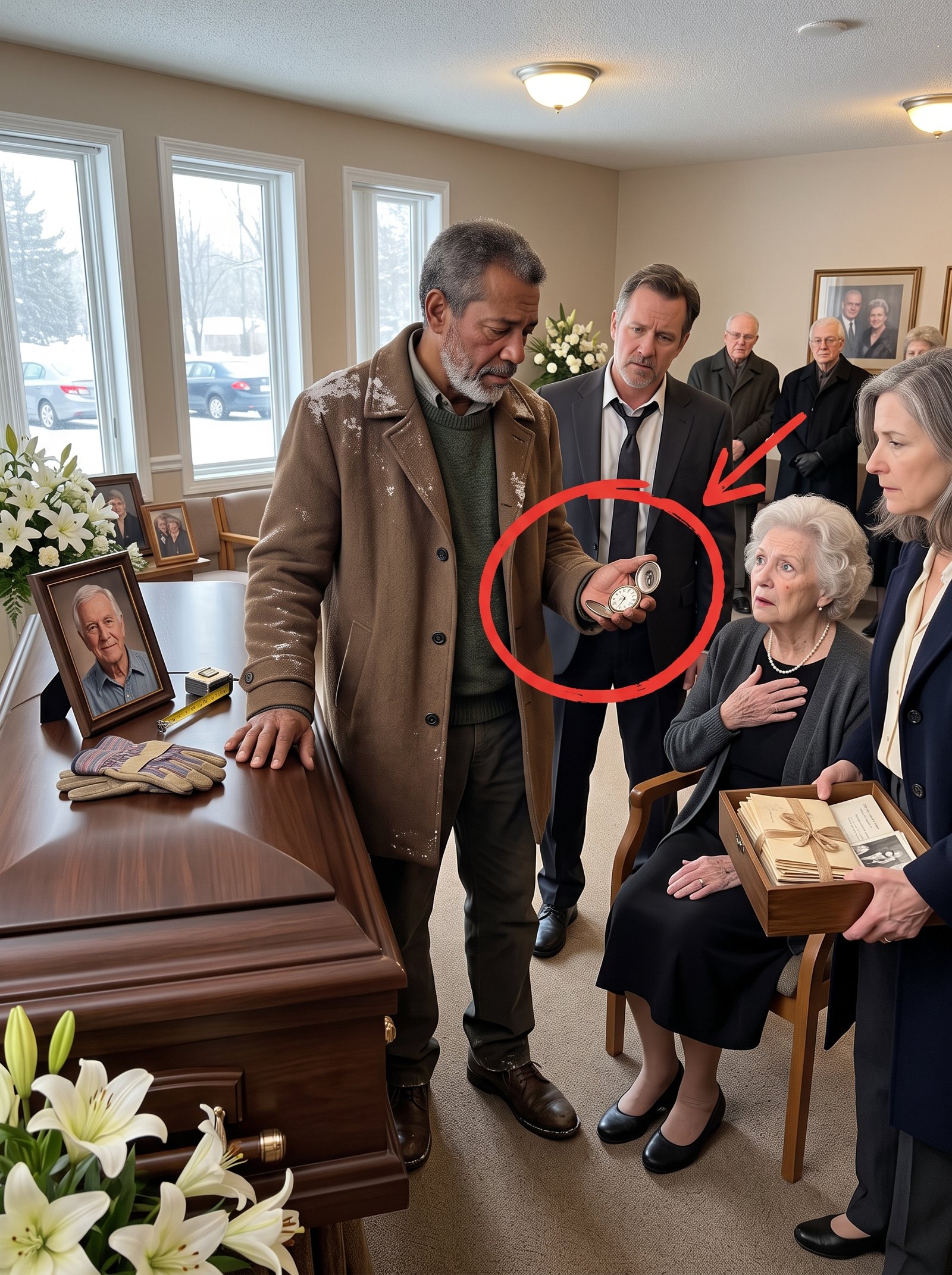
Thomas died eight months earlier after a long illness.
Before his death, he gave his ring, the cards, and the letter to Daniel.
But Daniel died unexpectedly before completing the journey.
The responsibility passed to Noah.
“He said promises don’t disappear when a person dies,” Noah explained. “They become someone else’s job.”
Mom moved Thomas’s Bible from the empty seat.
Noah sat beside her.
Then he handed the pastor another envelope.
Thomas had quietly created a small construction company. Before his illness, he sold it and placed part of the money in a trust.
He had left the church enough to renovate an unused building behind the sanctuary.
But the money came with one condition.
The building had to become temporary housing for parents and children who had nowhere safe to sleep.
Thomas wanted it named The Open Door House.
In his final letter, he explained why.
Rebecca and Daniel changed my life because someone had to decide they were family before the world considered them worthy of one.
Mom began to cry.
The letter continued:
I could not return to the house where I was raised, but I spent my life helping other people find somewhere they would not be asked to leave the person they loved outside.
Construction began three months later.
Noah and Rebecca attended the opening with us.
Above the entrance, the church placed a simple wooden sign:
NO ONE ENTERS THIS HOME ALONE. THE PEOPLE YOU LOVE ARE WELCOME TOO.
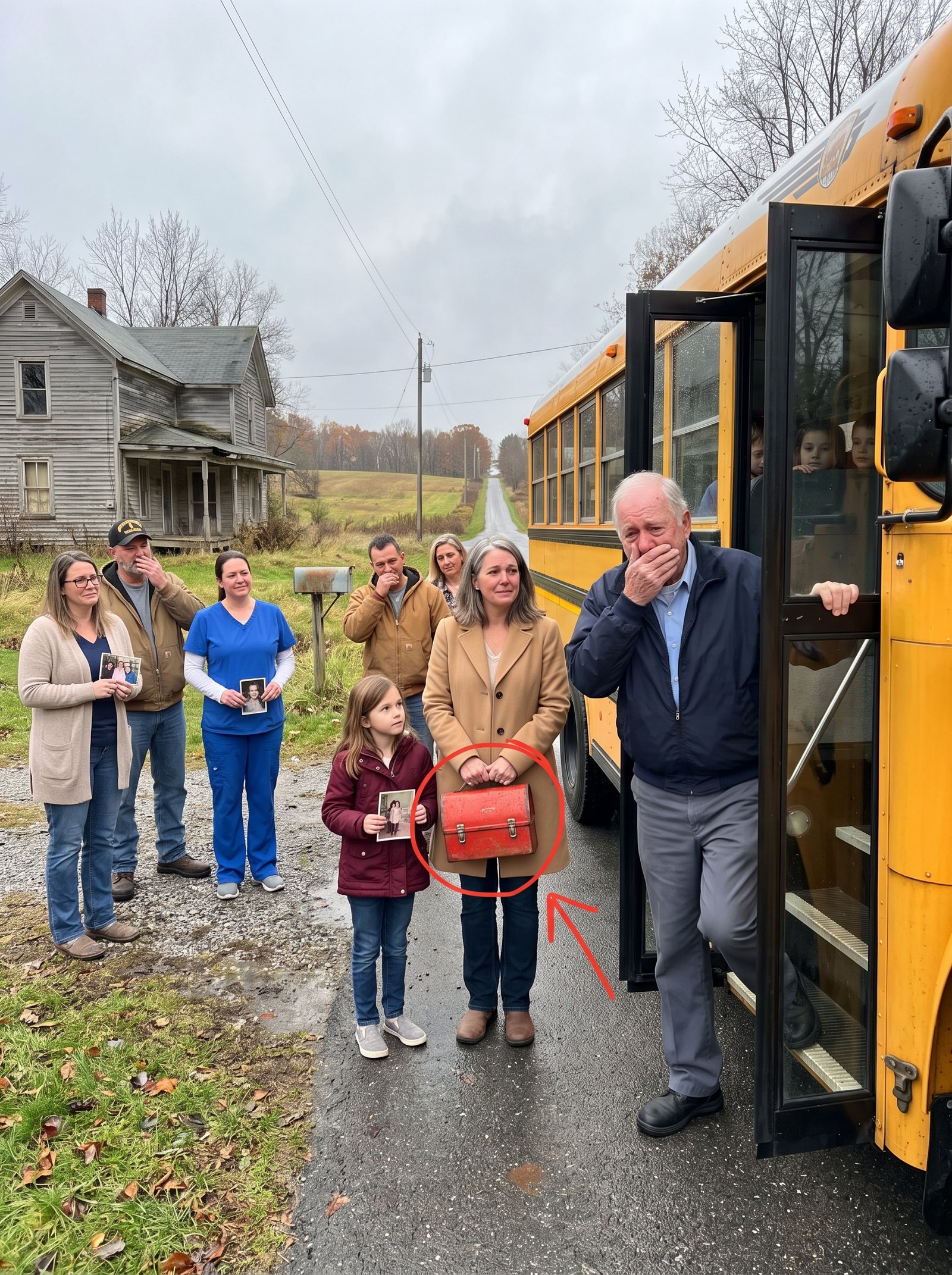
The first family arrived during a winter storm—a widowed father with two young daughters who had been sleeping in their car.
Mom met them at the door.
She gave the youngest girl Thomas’s old Bible to hold while volunteers carried their belongings inside.
Every Sunday after that, Noah sat beside Mom.
Sometimes Rebecca joined them.
The seat was no longer reserved for a man who might return.
It became a place for anyone visiting the church who feared they did not belong.
Mom kept Thomas’s wedding ring on a chain around her neck.
She also read one of his birthday cards every week.
The final card contained only two sentences:
Mom, I never stopped trying to become the man you believed I could be. I hope the family I chose proves that you raised me well.
Mom had waited twenty-seven years for Thomas to come through the church doors.
He never did.
But the boy sitting beside her carried his name, his promise and the family he had protected.
The pew was no longer empty.
And at last, Thomas had found his way home.